User goals and tasks
Definition of the user groups
The user definition of MindSpaces reservation system refers to how users perceive and interact with the system. MindSpaces is a reservation system developed for organizations to manage their space utilization efficiently.
Users of MindSpaces are typically employees or stakeholders within an organization who need to reserve meeting rooms or other spaces for their activities. They may include individuals from different departments, teams, or external parties.
The users' goals and tasks for using the MindSpaces reservation system are primarily to reserve spaces for meetings, events, or other activities. They may also need to view availability, search for specific types of rooms or spaces, and receive notifications on reservation updates.
Users expect the MindSpaces reservation system to be easy to use, intuitive, and responsive. They expect the system to provide a clear and accurate view of available spaces, and to allow for easy modification or cancellation of reservations. Users also expect the system to provide notifications and reminders for upcoming reservations and changes to the reservation schedule.
Overall, the user definition of the MindSpaces reservation system is focused on providing an efficient, user-friendly solution for managing space reservations in organizations. It aims to meet the needs and expectations of its users and provide a seamless experience for reserving and managing spaces.
MindSpaces is intended for users who do not have much experience with IT. It is crucial to design the system to be as easy to use as possible. This is especially important when users are from different care companies, as their level of technological proficiency may vary.
Key Considerations
To make the reservation system easy to use, here are some key considerations that are taken:
✨ User-Friendly Interface: The reservation system should have a user-friendly interface with clear and intuitive navigation. It should be easy for users to find what they need and to understand how to interact with the system.
🌱 Simple and Clear Language: The language used within the system should be simple and clear, avoiding technical jargon or confusing terms. Instructions and information should be presented in a way that is easy to understand for users with limited IT experience.
🎯 Limited Steps and Decision Points: The reservation process should be streamlined to minimize the number of steps required and the number of decision points presented to users. This will help to reduce confusion and make the process more efficient.
💬 Visual Aids and Feedback: The reservation system should provide visual aids and feedback to guide users through the reservation process. This can include progress bars, confirmation messages, and error messages to ensure that users are on the right track.
By incorporating these design considerations, the reservation system can be made as easy to use as possible for users with limited IT experience. This will help to ensure that the system is accessible and usable for all users, regardless of their technological proficiency.
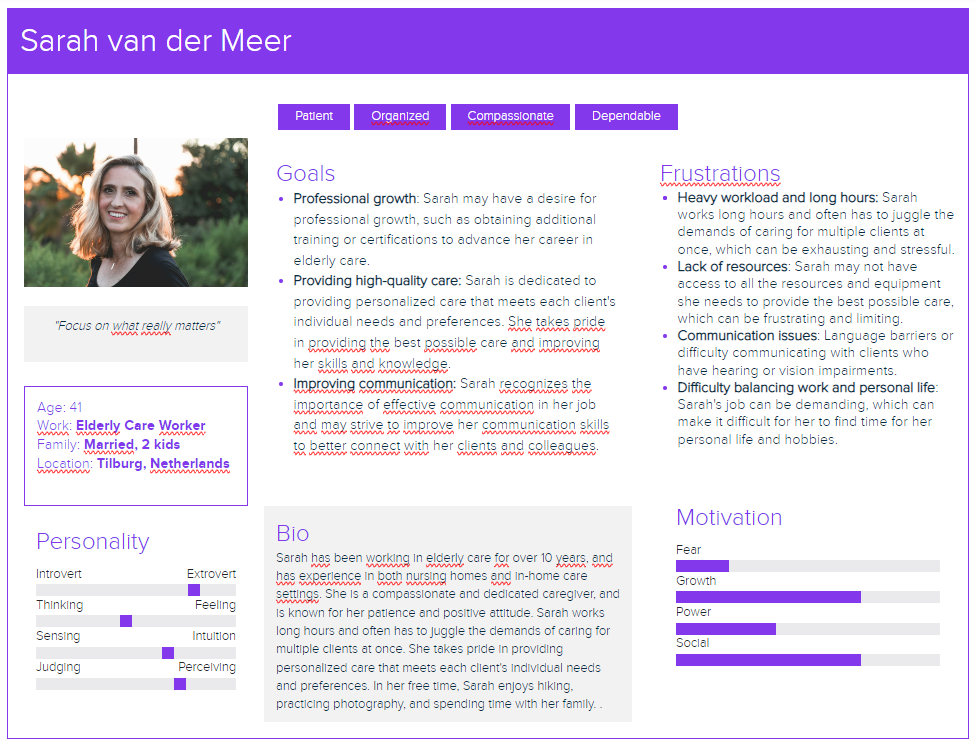
Persona
A persona is important because it helps to create a clear and detailed picture of the user or customer for whom a product or service is being designed. By developing a persona, designers and developers can better understand the needs, goals, behaviors, and preferences of the user, and can tailor the product or service to meet those specific needs. This helps to ensure that the product or service is more user-centered, and ultimately more effective in meeting the user's needs and providing a positive user experience. Persona also helps to align the team's understanding of the users and make decisions based on the user's perspective